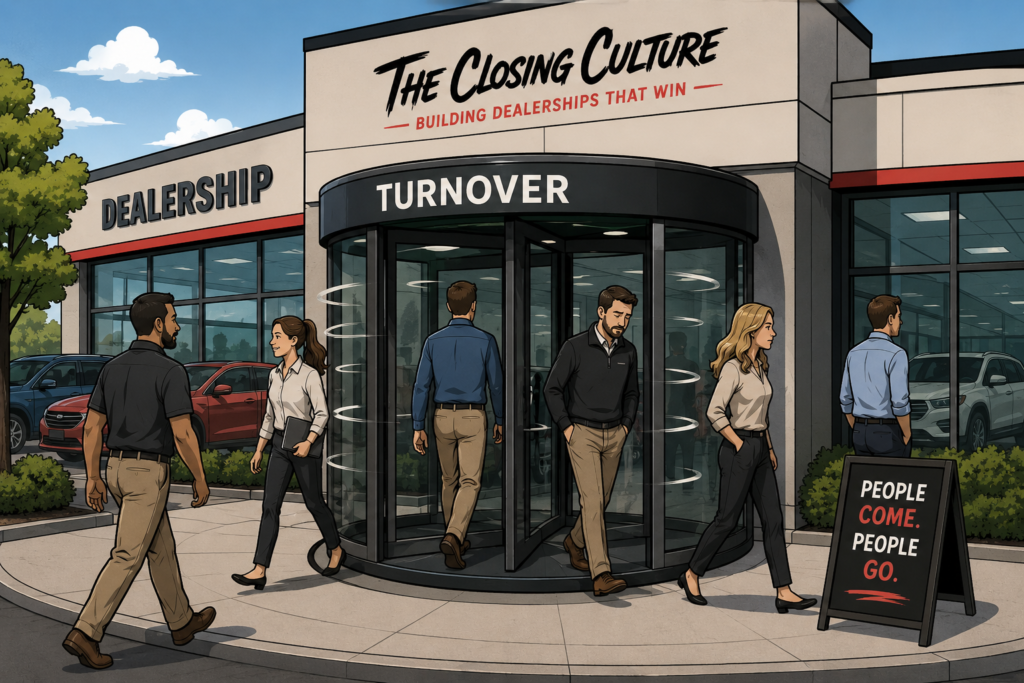
Dealership turn over is often mistaken for a people problem. Management starts wondering if the team is losing motivation. The team is wondering if management knows what they’re doing, and owners wonder what they can do to fix the problem.
Turn over is usually treated like it’s the issue. In reality, it is a symptom of a much bigger problem…
What’s the Problem?
The real problem is hiding inside the processes being used everyday:
- Lack of communication between departments
- Managers busy putting out fires
- The BDC is short staffed
These are process and scheduling issues. And they lead to your dealership losing its best team mates.
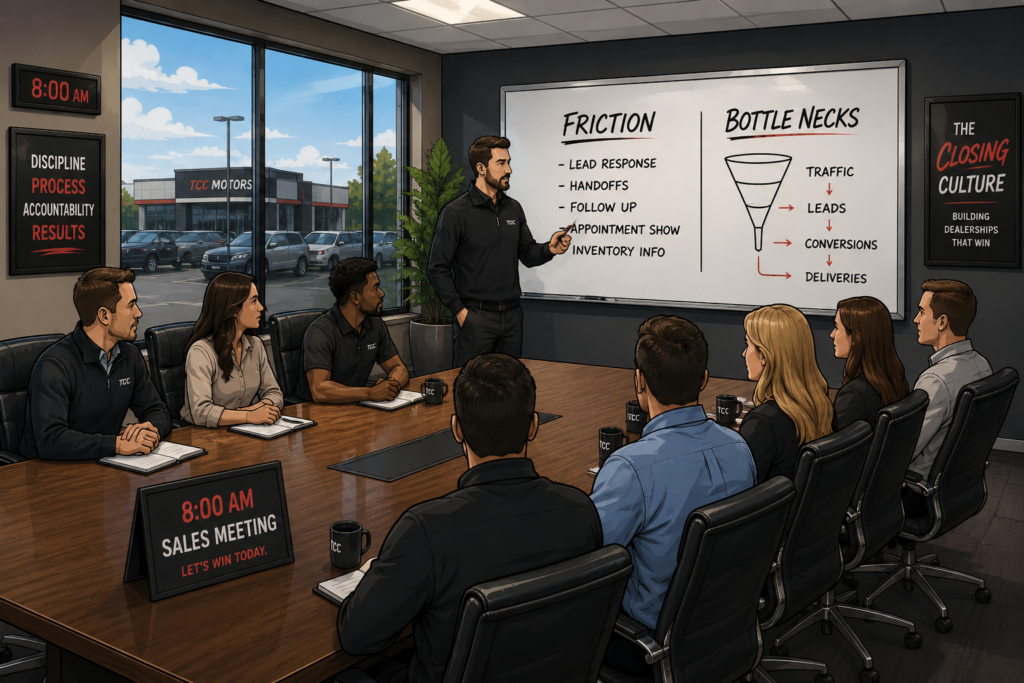
Friction Builds Gradually
It can be seen in a missed hand off here, an unclear process there…
- A CRM workflow that nobody fully understands.
- A lead that sits untouched because everyone assumes someone else grabbed it.
- A salesperson who has to stop what they’re doing three times an hour because information wasn’t communicated correctly the first time.
None of these issues seem significant on their own. But over time, they create strain.
That strain becomes frustration. Frustration becomes burnout. And burnout eventually contributes to turn over.
If your dealership is struggling with employee turn over, it may be worth looking beyond the people and examining the systems they work with.
Turn over Is Expensive
Replacing employees requires recruiting, interviewing, training and coaching. And unless they have prior experience, they’re not going to replace your key player that just walked out on. Saturday.
Not for a long time.
This leads to a drop in productivity and your customers getting lackluster service.
It also takes management away from performing key tasks because they’re training and filling in gaps.
On top of that, your existing team is taking on double duty while positions remain open. Which has them dusting off their resume, trust me.
SCHEDULE YOUR FREE DIAGNOSTIC CALL
The Direct Costs of Turn Over are Significant
- Lack of focus leading to sub par customer experience and bad reviews
- Tired team mates making costly mistakes (like quoting the wrong price)
- Management constantly putting out fires instead of desking deals.
But, the indirect costs are often worse. When experienced employees quit, they take dealership knowledge with them. They know your customers, they know your processes and they know your weaknesses. When they leave, that knowledge goes with them. Often straight to your competitor.
Most Burnout Doesn’t Start With Long Hours
When people think about burnout, they often picture employees working excessive hours. Long hours can certainly contribute to burnout. But many employees become exhausted for a different reason.
They spend their entire day fighting friction.
Picture this: you started your morning with a game plan. Today was going to be the day that your month turned around.
Then the interruptions begin:
- leads are not being assigned properly
- An appointment was put in the CRM as a fresh up
- A customer arrives and no one knows why they’re there or that they have an appointment
About that Game Plan
All this and the sales person and management are constantly heading to the BDC because hand offs aren’t happening and the notes aren’t detailed enough.
Employees are spending their day reacting, not executing. These issues take their attention away from what matters… the customer and the bottom line.
And by the end of the day, they leave feeling exhausted while having little to show for their effort.
This type of environment slowly drains energy.
By the end of the day, the team feels mentally exhausted despite having little to show for their effort.
And that’s when your employees start feeling like they’re working harder for less money. That feeling becomes a source of frustration and disengagement.
The Hidden Friction Behind Turn Over
Many dealerships focus on visible problems:
- Low appointment show rates.
- Poor lead response times.
- Missed sales opportunities.
- Customer complaints.
These are important metrics. But they are usually representative of the trickling effects of a deeper problem.
Common Examples of Friction Include:
- Unclear Ownership
- When employees are not sure who owns a task, delays occur.
- Leads sit longer than they should.
- Customers receive inconsistent communication.
- Employees become frustrated because accountability feels unclear.
The Price of Inconsistent Processes
The dealership has processes in place, but they’ve become more of a guideline. One manager does things one way, while another prefers his way.
This leads to the team getting conflicting instructions. Which leads to mistakes, which then leads to management getting involved. And sometimes the team gets blamed for management being inconsistent.
Poor Internal Communication
BDC teams, sales teams, and management often have different information. Because of this, customers end up repeating themselves.
The appointments become disorganized. And trust between departments begins to break down.
And what happens next? Management is on damage control and they don’t even have a moment to consider why this is happening. The team is dealing with the same problems over and over again, and they start to feel like nothing ever improves. Even your strongest employees get discouraged.
Why Good Employees Leave
One of the most common misconceptions about turn over is that weak employees leave while strong employees stay. In reality, strong employees often leave first.
High performers typically have options.
They know their value.
They know they can succeed elsewhere.
When they encounter constant friction, they decide the effort required to deal with it isn’t worth it. This creates another challenge… the employees who contribute the most often absorb the most operational strain. They become the person everyone relies on.
They fix broken processes.
They answer questions.
They compensate for gaps in communication.
For a while, they keep the system functioning. But eventually, even your best employees are exhausted.
When they leave, leadership is often surprised. After all, they seemed successful.
What leadership may not have seen was the amount of friction that employee was managing behind the scenes.
SCHEDULE YOUR FREE DIAGNOSTIC CALL
Turn over Creates More Turn over
The managers have to spend more time training. And the processes become inconsistent as new team members learn the ropes.
The workload increases for everyone who stays.
This creates a dangerous cycle because turn over increases workload.
- Increased workload creates frustration.
- Frustration contributes to burnout.
- Burnout leads to more turnover.
Breaking this cycle requires more than hiring replacements.
It requires identifying and reducing the friction that started the problem in the first place.

SCHEDULE YOUR FREE DIAGNOSTIC CALL
Fix the Process Before Replacing the People
Many dealerships respond to turn over by immediately focusing on recruitment.
Recruitment is important.
However, hiring more people into a broken process rarely solves the issue.
If employees consistently leave for the same reasons, replacing them simply resets the clock.
Instead, dealerships should be asking some questions. What is making the role so difficult?
Where are employees losing momentum? Which tasks create the most frustration? Which problems appear repeatedly? What obstacles prevent employees from doing their best work?
The answers often reveal opportunities for meaningful improvement.
Sometimes the solution is surprisingly simple. It looks like a clearer handoff process, better CRM notifications, more consistent communication and standardized follow up procedures. These small changes can dramatically reduce friction. Reducing the friction and cleaning up bottle necks improves the teams experience.
The Competitive Advantage Nobody Talks About
Most dealerships compete on inventory, pricing, advertising, and technology.
Those factors matter.
But there is another competitive advantage that receives far less attention.
Clarity.
Employees thrive when they know what is expected of them. They thrive when communication is clear. They thrive when systems support their success rather than create obstacles.
When friction decreases, performance often improves naturally. Employees feel more confident. Customers receive a better experience. Managers spend less time resolving preventable issues. Turnover frequently begins to stabilize.
The goal is not to create a perfect dealership. Every operation experiences challenges.
The goal is to create an environment where employees can focus on serving customers instead of constantly fighting the process.
Final Thoughts
Turnover is rarely caused by a single event. It is usually the result of accumulated friction.
- Small frustrations.
- Repeated obstacles.
- Preventable inefficiencies.
Over time, these issues wear people down.
Before assuming your dealership has a people problem, consider whether it might have a process problem.
Look closely at the systems your team works with every day.
Identify where momentum is being lost.
Reduce the friction that creates unnecessary strain.
Because sometimes the dealership isn’t burned out.
The process is.
And when the process improves, the people often do too.
Let’s talk about how I can help you clear up bottle necks and get your dealership back on track.